Dossier vs. Tuoksu vs. Oakcha: The Affordable Luxury Perfume Showdown
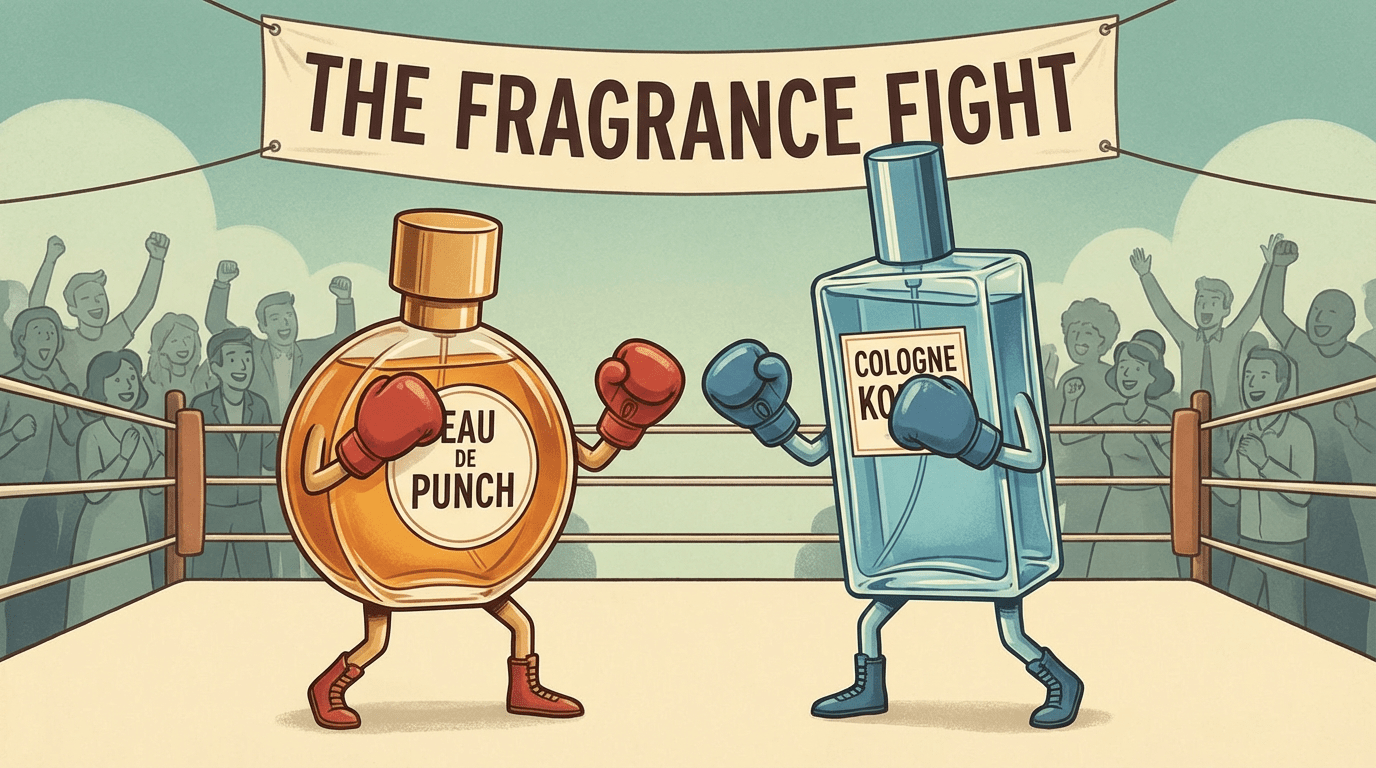
The democratization of luxury fragrance has entered its messy middle era. Three brands—Dossier, Tuoksu, and Oakcha—have each staked a claim in the "smell expensive without the expense" territory, but they've taken remarkably different approaches to get there. And frankly, the internet's hot takes haven't been doing you any favors in distinguishing between them.
If you've found yourself paralyzed between browser tabs, wondering whether the TikTok girlies are steering you right or just collecting affiliate commissions, consider this your definitive guide to deciding where your fragrance dollars should actually go.
The Cliff Notes (For Those Who Won't Read the Whole Thing)
| Factor | Dossier | Tuoksu | Oakcha |
|---|---|---|---|
| Concentration | Varies (typically 10-20% EdP/EdT) | 18-23% Extrait de Parfum | 30% Extrait de Parfum |
| Standard Bottle Size | 50ml | 30ml / 50ml | 30ml / 50ml |
| Price Range | $29-49 USD (50ml) | $32-54 CAD (~$24-40 USD) | $35-60 USD |
| Made In | Grasse, France | Canada (ingredients from Grasse) | New York (oils from France) |
| Collection Size | 100+ fragrances | 70+ fragrances | 130+ fragrances |
| Business Model | Designer dupes + originals | "Inspired by" + originals | Designer dupes + signature line |
Now let's actually talk about what those numbers mean.
The Philosophy: Three Very Different Approaches to "Affordable Luxury"
Dossier: The Democratizer
Dossier arrived on the scene in 2018 with a proposition that was equal parts audacious and obvious: why should a fragrance cost $300 when the juice inside accounts for roughly 3% of that price tag? The rest, as founder Sergio Tache likes to point out, goes to celebrity endorsements, elaborate packaging, and what the industry euphemistically calls "prestige pricing."
Their model is straightforward transparency. They'll tell you exactly which $325 Maison Francis Kurkdjian fragrance inspired their $49 bottle, and they'll let you decide whether the 85% similarity is worth the 85% savings. It's not subtle. It's not trying to be.
What Dossier does exceptionally well is volume. With over 100 fragrances in their Impressions Collection alone, plus their newer Originals, Wellness, and Speakeasy lines, they've built what amounts to a fragrance library. Their "buy three bottles for $29 each" bundle deals have made them the gateway drug for an entire generation of perfume enthusiasts who couldn't otherwise justify experimenting with niche scents.
Tuoksu: The Quiet Challenger
If Dossier is the loud American cousin who knows exactly which designer bag your perfume is "inspired by," Tuoksu created by refined European expats tired of the same-old-same-old perfume game.
Yes, Tuoksu acknowledges inspirations on their product pages—you'll see "if you like Baccarat Rouge 540, you might like this" language—but they're considerably more circumspect about the comparison. Their positioning is less "dupe" and more "alternative approach to the same olfactory territory."
What sets Tuoksu apart is their concentration game. Every fragrance in their main line is extrait de parfum at 18-23% concentration. For context: most designer "eau de parfum" sits at 15-20%, and many mass-market fragrances are eau de toilette at 5-15%. Tuoksu is giving you the concentration of fragrances that typically retail for three to four times the price.
Their Molecular Collection—priced at a frankly incredible $44—focuses on synthetic aromachemicals like Iso E Super, Ambroxan, and Cashmeran. These aren't dupes of anything specific; they're explorations of the building blocks that make expensive perfumes smell expensive.
The clean perfume angle isn't just marketing. The brand emphasizes IFRA compliance, vegan formulations, and sustainable sourcing from Grasse. They're playing the long game of building a house, not just selling knockoffs.
Oakcha: The Concentration Maximalist
Oakcha entered the chat with what amounts to a flex: 30% fragrance oil concentration, no exceptions.
To put this in perspective: Oakcha's baseline concentration exceeds what most luxury houses offer in their most premium (and most expensive) extrait de parfum formulations. When a brand like Creed or Tom Ford releases an "intense" or "extrait" version at double the price, they're typically hitting 20-25% concentration. Oakcha starts at 30%.
This isn't just spec-sheet bragging. Higher concentration generally means better longevity, stronger projection, and—critically—less product needed per application. A 30ml bottle at 30% concentration will outlast a 50ml bottle at 15% concentration, mathematically speaking.
Oakcha positions itself as the choice for people who understand fragrance chemistry and want maximum bang for their buck. Their black bottles with magnetic caps signal "premium" without the premium guilt. And their commitment to being paraben-free and phthalate-free appeals to the clean beauty crowd who've extended their standards to fragrance.
The Nitty-Gritty: What You Actually Get
Concentration and Longevity
Let's talk about what "concentration" actually means for your daily life.
Oakcha wins on paper with its 30% extrait formulation. In practice, reviewers report 6-8+ hours of wear time with strong projection for the first 3-4 hours, settling into a skin scent afterward. The catch? Some users find Oakcha's opening "screechy" or intense—that high concentration can be overwhelming if you're heavy-handed.
Tuoksu at 18-23% hits the sweet spot for many users. The extrait concentration provides all-day longevity (8-12 hours is commonly reported) without the "entering a room like a fragrance bomb" effect. Their Molecular Collection, at 15% eau de parfum, is deliberately lighter—designed for layering and closer-to-skin wear.
Dossier is the wild card. Their concentrations vary by fragrance, and they've historically been less transparent about exact percentages. User reports suggest 4-8 hours of wear time, with some fragrances performing better than others. Their Ambery Saffron (the Baccarat Rouge 540 inspiration) gets consistently strong longevity reviews, while lighter florals may need reapplication.
Accuracy to Inspiration
If your primary motivation is "I want to smell like Tom Ford Tobacco Vanille without spending $295," how close do these brands actually get?
Dossier has built its reputation on accuracy. Blind tests consistently show that untrained noses can't distinguish Dossier from the inspirations in the opening and heart notes. The dry-down is typically where differences emerge—Dossier tends toward cleaner, simpler base notes. Their Ambery Saffron and Floral Marshmallow (Love Don't Be Shy dupe) are considered near-perfect by most reviewers.
Oakcha takes a slightly different approach—their dupes are interpretations rather than copies. Reviewers note that Oakcha often emphasizes certain notes over others. Their Sweven (Baccarat Rouge 540 inspiration) reportedly smells "less artificial" than the original to some noses. Their Torrid Day (Tobacco Vanille inspiration) leans heavily into the spice, lightening the vanilla.
Tuoksu deliberately creates space between their fragrances and the inspirations. Their Saffron Threads + Cedarwood shares DNA with Baccarat Rouge 540 but isn't attempting to be a clone—it's an exploration of similar accords. This makes them less appealing if you want an exact match, but more interesting if you want something that evokes without copying.
Pricing and Value Calculation
Here's where things get interesting. Let's do the math on cost per milliliter of actual fragrance oil:
Dossier at $49 for 50ml at ~15% concentration = ~7.5ml of fragrance oil = $6.53 per ml of oil
Tuoksu at $49 for 50ml at 20% concentration = 10ml of fragrance oil = $3.60 per ml of oil
Oakcha at $55 for 50ml at 30% concentration = 15ml of fragrance oil = $3.67 per ml of oil
By this metric, Tuoksu and Oakcha are nearly tied, and both deliver significantly more value than Dossier on a pure concentration basis. However, Dossier's frequent sales (three bottles for $29 each) can dramatically shift this equation.
For comparison, Maison Francis Kurkdjian's Baccarat Rouge 540 at $325 for 70ml at ~20% concentration = 14ml of fragrance oil = $23.21 per ml of oil. All three budget brands represent an 80-85% cost reduction.
The Intangibles: Packaging, Experience, and Vibes
Dossier goes minimal. Clear glass bottles, magnetic caps, recyclable packaging. The aesthetic is "I don't need a fancy bottle because I'm confident in what's inside." Functional, not Instagrammable. Their website is clean, searchable, and includes a quiz to help overwhelmed newcomers find their starting point.
Oakcha leans into luxury aesthetics. Black color-coated glass bottles with magnetic caps. The unboxing experience is designed to feel premium. Their website showcases an extensive collection but can feel harder to navigate when searching for specific scent profiles.
Tuoksu strikes a middle ground. Their bottles are clean and modern with a European sensibility—not trying too hard in either direction. The naming convention (Saffron + Savage Oud, Bourbon Vanilla + Honey Milk) tells you exactly what you're getting. For those who prioritize understanding their fragrances over brand recognition, it's refreshing.
The Verdict: Which Brand Is Right for You?
Choose Dossier if:
- You want to try a specific designer fragrance at a fraction of the price
- Accuracy to the inspiration matters more than concentration
- You appreciate bundle deals and the ability to build a large collection cheaply
- You prefer established customer service and a generous return policy (30 days, donated to charity)
- You shop at Walmart and appreciate retail availability
Choose Tuoksu if:
- Concentration matters—you want extrait de parfum without extrait prices
- You're interested in the Molecular Collection's synthetic-forward approach
- You prefer fragrances that are "inspired by" rather than "copying"
- Sustainable, vegan, master perfumer-driven products align with your values
Choose Oakcha if:
- Maximum concentration is your priority
- You want beast-mode longevity and projection
- Clean beauty standards (paraben-free, phthalate-free) matter to you
- You appreciate luxury packaging at non-luxury prices
- You prefer extrait de parfum exclusivity in a brand
The Real Talk Nobody's Telling You
None of these brands are creating anything revolutionary from a fragrance-composition standpoint. They're all leveraging the same basic economics: fragrance ingredients are relatively cheap, luxury markup is relatively insane, and direct-to-consumer models can cut out the middlemen.
The "dupe culture" conversation is also worth having honestly. Some fragrance purists will tell you these brands are destroying the industry. Others will argue they're democratizing access to experiences previously reserved for the wealthy. The truth is probably more boring: they're businesses identifying an underserved market and serving it.
What matters for your wallet is simple: can you smell the difference? For most people, in most situations, the answer is no. A well-made dupe will get you 80-90% of the way there at 15-20% of the cost. Whether that final 10-20% matters to you is a personal calculation that has more to do with your relationship to luxury and authenticity than it does with olfactory reality.
Final Recommendations
Best Overall Value: Tuoksu. The concentration-to-price ratio is excellent, the clean and sustainable perfumes add credibility, and the naming convention suggests perfumers who care about the craft.
Best for Dupe Accuracy: Dossier. They've been doing this longest, they have the widest selection, and their accuracy is consistently praised.
Best for Longevity Obsessives: Oakcha. That 30% concentration isn't marketing—it's math.
Best for Fragrance Exploration: All three offer discovery sets and sample options. Dossier's discovery set (10 x 11ml) is excellent for beginners. Oakcha's sample discovery set (7 x 2ml) is great for concentration maximalists. Tuoksu's smaller catalog makes it easier to narrow down based on note preferences.
The best fragrance is the one you'll actually wear. At these prices, you can afford to experiment until you find it.