The Complete Beginner's Guide to Perfume: Everything You Need to Know to Start
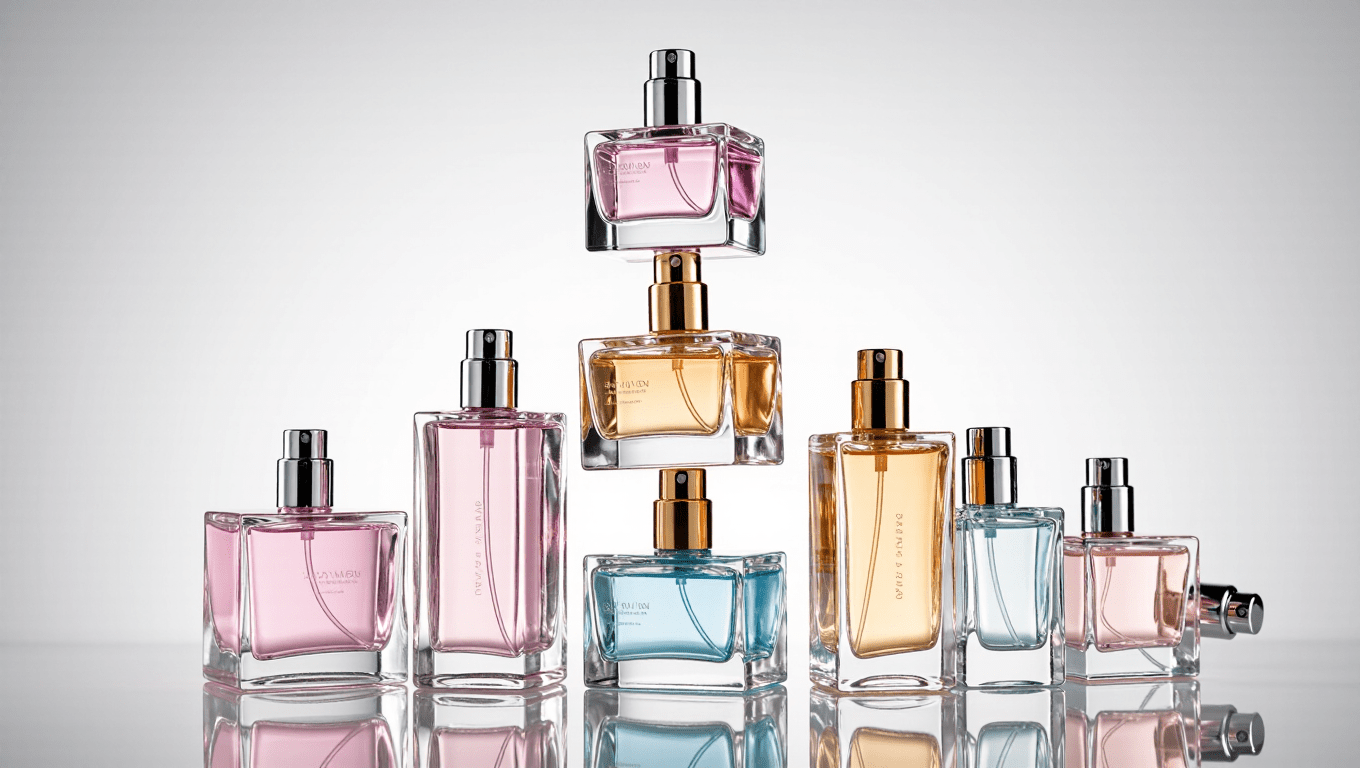
Everything you need to know about fragrance—without the pretension. From concentration levels to scent families to the mistakes that are sabotaging your perfume game, consider this your no-nonsense entry point into the world of scent.
There's a particular kind of paralysis that strikes when you're standing in front of a fragrance counter for the first time. Rows of beautiful bottles, incomprehensible names, sales associates asking about your "olfactory preferences," and a sneaking suspicion that everyone around you speaks a language you never learned.
Here's the truth: perfume isn't complicated. It's been made complicated—by marketing, by gatekeeping, by an industry that benefits from your confusion. But at its core, fragrance is simply about finding something that makes you feel good when you smell it.
This guide will give you the vocabulary, the framework, and the practical knowledge to start exploring perfume with confidence. No prior experience required. No judgment for not knowing what "sillage" means. (We'll get there.)
The Basics: What's Actually in That Bottle?
The Fragrance Pyramid
Every perfume is constructed in layers, typically visualized as a pyramid. Understanding this structure helps you make sense of why a fragrance smells different when you first spray it versus three hours later.
Top Notes (5-30 minutes) These are the scents you smell immediately after spraying. They're light, volatile molecules that evaporate quickly—think citrus fruits (bergamot, lemon, orange), light herbs (basil, mint), and certain aldehydes. Top notes create your first impression, but they're gone relatively fast. Don't judge a fragrance solely on its opening.
Heart Notes (30 minutes to 4 hours) Also called middle notes, these form the core of the fragrance. They emerge as the top notes fade and represent what the perfumer considers the "true" character of the scent. Common heart notes include florals (rose, jasmine, ylang-ylang), fruits (peach, apple, berries), and spices (cinnamon, cardamom, pink pepper).
Base Notes (4+ hours) These are the heavy, rich molecules that linger longest on your skin. They provide depth and longevity. Classic base notes include woods (sandalwood, cedar, oud), resins (amber, benzoin, frankincense), musks, vanilla, and leather. The base is what people smell when they lean in hours after you've applied your fragrance.
Why This Matters: When testing a perfume, you need to experience all three layers before making a judgment. That gorgeous citrus burst you loved in the store might dry down to something you hate—or that unremarkable opening might bloom into your new signature scent. Give a fragrance at least 30 minutes on your skin before deciding.
Concentration Levels: The Alphabet Soup Explained
Those French words on perfume bottles—Eau de Toilette, Eau de Parfum, Extrait—aren't just fancy labeling. They indicate how much actual fragrance oil is in the bottle, which affects both longevity and price.
Eau Fraîche (1-3% concentration) The lightest option. Refreshing but fleeting—you might get an hour or two of wear. Good for a quick refresh, not a signature scent.
Eau de Cologne (2-4% concentration) Despite the name, cologne isn't just for men. It's simply a lighter concentration, typically lasting 2-3 hours. Classic colognes are often citrus-forward and refreshing.
Eau de Toilette (5-15% concentration) The most common concentration for designer fragrances. Expect 3-5 hours of wear. EDT formulations are often brighter and more "daytime" than their EDP counterparts of the same fragrance.
Eau de Parfum (15-20% concentration) Richer and longer-lasting, typically 5-8 hours. Many fragrances are released in both EDT and EDP versions—the EDP will smell denser and last longer.
Extrait de Parfum / Parfum (20-40% concentration) The most concentrated (and expensive) option. A small amount goes a long way, and these can last 8-12+ hours. The scent profile is often deeper and more intimate than lighter concentrations of the same fragrance.
The Practical Takeaway: Higher concentration means longer wear and generally richer scent—but also higher price per bottle. However, because you use less product per application, extrait formulations can actually be more economical long-term. A brand like Tuoksu, for example, offers extrait de parfum at 18-23% concentration for a fraction of what you'd pay for comparable designer concentrations—meaning you get both the longevity and the value.
The Fragrance Families: Finding Your Territory
Fragrances are organized into families based on their dominant characteristics. Understanding these categories helps you identify patterns in what you like—and gives you vocabulary for communicating your preferences.
Floral
The largest and most diverse family. Can range from a single flower (soliflore) to complex bouquets. Subcategories include soft florals (powdery, romantic), floral-oriental (florals with warm spices), and fresh florals (lighter, greener).
You might like florals if: You enjoy the smell of actual flowers, you gravitate toward traditionally feminine scents, or you want something versatile for daily wear.
Classic notes: Rose, jasmine, lily of the valley, peony, gardenia, ylang-ylang, tuberose, iris/orris
Fresh
Clean, bright, and often aquatic or citrus-forward. This family includes marine/ozonic scents (ocean breezes, sea salt), citrus (bergamot, lemon, grapefruit), and aromatic herbs (lavender, rosemary, mint).
You might like fresh scents if: You prefer "clean" smells, you want something appropriate for work, you live in a warm climate, or you're drawn to the idea of smelling like you just stepped out of the shower.
Classic notes: Bergamot, lemon, grapefruit, marine accord, cucumber, green tea, vetiver
Woody
Warm, dry, and grounding. This family includes soft woods (sandalwood, cedar), mossy/earthy scents (patchouli, vetiver, oakmoss), and dry woods (oud, guaiac).
You might like woody scents if: You prefer understated elegance, you want something with staying power, or you're looking for something that reads as sophisticated without being heavy.
Classic notes: Sandalwood, cedarwood, oud, vetiver, patchouli, guaiac wood, birch
Oriental/Amber
Rich, warm, and often sweet or spicy. These fragrances are typically sensual and evening-appropriate, featuring notes like vanilla, amber, resins, and warming spices.
You might like oriental scents if: You want something dramatic and memorable, you prefer evening fragrances, or you're drawn to warmth and depth.
Classic notes: Amber, vanilla, benzoin, labdanum, incense, myrrh, tonka bean, cardamom, cinnamon, saffron
Gourmand
A relatively modern category featuring food-inspired notes. Think dessert-like scents: chocolate, coffee, caramel, honey, praline. Gourmands often overlap with orientals but lean sweeter and more playful.
You might like gourmands if: You have a sweet tooth, you want a cozy "comfort" scent, or you enjoy being the person who makes everyone around them hungry.
Classic notes: Vanilla, chocolate, coffee, caramel, honey, almond, coconut, brown sugar
Fougère
Literally "fern" in French, though the category doesn't actually smell like ferns. Fougères are built on a structure of lavender, coumarin (hay-like sweetness), and oakmoss. They're traditionally masculine but increasingly unisex.
You might like fougères if: You appreciate classic "barbershop" scents, you want something fresh but sophisticated, or you're looking for a traditionally masculine fragrance.
Classic notes: Lavender, coumarin, oakmoss, geranium, bergamot
Chypre
Named after the French word for Cyprus, chypres are built on a foundation of citrus (usually bergamot), labdanum, and oakmoss. They're complex, sophisticated, and often described as "grown-up" fragrances.
You might like chypres if: You want something distinctive and elegant, you appreciate complexity over straightforward prettiness, or you're tired of mainstream fragrances that all smell the same.
Classic notes: Bergamot, oakmoss, labdanum, patchouli, rose
Leather
Exactly what it sounds like—fragrances that evoke leather, either through natural extracts or synthetic molecules. Can range from soft, supple suede to smoky, rugged hide.
You might like leather scents if: You're drawn to unconventional fragrances, you want something with edge, or you appreciate texture in your scents.
Classic notes: Leather accord, suede, birch tar, castoreum, smoke
How to Actually Test Perfume
Here's where most beginners go wrong: they spray ten fragrances on paper strips, get overwhelmed, buy something based on a 30-second impression, and wonder why they hate it two weeks later.
The Right Way to Sample
Step 1: Prepare Your Nose Don't wear fragrance when you're going to test new scents. The fragrance you're already wearing will interfere with your ability to evaluate anything else. Your nose can only accurately assess about 3-4 fragrances before olfactory fatigue sets in and everything starts smelling the same.
Step 2: Use Paper Strips for Initial Screening Blotters (those white paper strips at fragrance counters) are useful for a first pass. Spray once onto the strip from about 6 inches away, wave it gently to let the alcohol evaporate, then sniff from about an inch away. Use blotters to narrow down your options from many to a manageable few.
Step 3: Test on Skin Once you've narrowed it down to 1-2 serious contenders, spray on your skin—ideally your wrist or inner arm. Don't spray more than two fragrances on your body at once; they'll contaminate each other.
Step 4: Wait This is the part most people skip, and it's the most important. Wait at least 30 minutes before making any decisions. Better yet, wear the fragrance for a full day. The dry-down (how the fragrance smells after several hours) is what you'll actually be living with.
Step 5: Live With It If possible, get a sample and wear it for several days before committing to a full bottle. Your opinion of a fragrance can change dramatically depending on context—what you're wearing, where you are, who you're with, how you're feeling.
What About the Coffee Beans?
You've probably seen the jars of coffee beans at fragrance counters, supposedly for "resetting" your nose between scents. The science here is questionable—coffee beans don't actually neutralize your olfactory receptors. A better approach: smell your own clean skin or step outside for fresh air between fragrances. Or simply accept that after 3-4 tests, you need a break.
Don't Trust Your First Impression
A fragrance that smells amazing in the first five minutes might dry down to something you hate—and vice versa. The top notes are designed to grab your attention, but you're not buying top notes. You're buying the complete evolution. Be patient.
Skin Chemistry: Why Perfume Smells Different on Everyone
You've probably noticed that a fragrance can smell completely different on your friend than it does on you. This isn't your imagination—it's chemistry.
Your skin's pH, oil production, microbiome, and even your diet can affect how a fragrance develops. Oily skin tends to hold fragrance longer and project it more strongly. Dry skin can cause fragrances to fade faster. Certain medications, hormones, and health conditions can also change how perfume smells on you.
Practical Implications:
- Always test on your own skin before buying
- What works beautifully on someone else might not work on you
- A fragrance you love in winter might smell different in summer when your skin chemistry changes
- If you have dry skin, apply an unscented moisturizer before your fragrance to help it last longer
The Mistakes Everyone Makes (And How to Avoid Them)
Rubbing Your Wrists Together
This is probably the most common perfume mistake. When you spray fragrance on your wrists and rub them together, you're generating friction and heat that can break down the fragrance molecules—particularly the delicate top notes. Instead, spray and let the fragrance dry naturally.
Over-Applying
More is not better. If you can't smell your perfume anymore, it's because you've gone nose-blind to it—not because it's faded. Everyone around you can still smell it. Start with 2-4 sprays and adjust based on the fragrance's strength and your environment.
Under-Applying
On the flip side, a single tentative spritz isn't going to cut it. Perfume needs to be applied to pulse points (warm areas where blood vessels are close to the skin) to project properly.
Storing Perfume Wrong
Heat, light, and humidity are enemies of fragrance. The bathroom—where most people store their perfume—is actually the worst possible location because of the temperature fluctuations and steam from showers. Store your fragrances in a cool, dark place. Keep the original box if you can.
Judging Too Quickly
We've covered this, but it bears repeating: don't buy a fragrance based on the first five minutes. The dry-down is where you actually live.
Applying to Clothes Instead of Skin
Perfume is designed to interact with your skin's warmth and natural oils. Spraying on clothes bypasses this entirely and can stain certain fabrics. Apply to skin, then dress.
Matching Seasons and Occasions
This isn't exactly a "mistake," but it's worth considering. Heavy, sweet fragrances that feel cozy in winter can become cloying and suffocating in summer heat. Light, fresh scents that are perfect for the office might disappear entirely at an evening event. Building a small collection rather than searching for one "signature" scent gives you more flexibility.
Where to Apply Perfume
Pulse points are the classic recommendation because the warmth of blood flow helps diffuse the fragrance. The most effective spots:
- Wrists (don't rub together!)
- Neck/throat
- Behind the ears
- Inside the elbows
- Behind the knees (if you're wearing a skirt or shorts)
- Chest (if you're wearing something low-cut or want an intimate scent bubble)
Some people also spray their hair (the fragrance lasts longer in hair than on skin) or a light mist in front of them to walk through. Experiment to find what works for you.
Building Your First Collection
You don't need fifty bottles. In fact, having too many fragrances can be overwhelming and lead to decision paralysis. Here's a simple framework for building a versatile starter collection:
The Essentials:
- A Fresh/Light Scent: For work, casual daytime wear, and warm weather
- A Warm/Rich Scent: For evenings, cooler weather, and when you want to make an impression
- A Signature or Wildcard: Something distinctly "you" that might not fit a category
This three-bottle collection covers most situations. As you learn more about what you like, you can expand from there.
Starting on a Budget
You don't need to spend hundreds of dollars to build a quality collection. The affordable luxury fragrance market has exploded in recent years, with brands offering high concentrations and quality ingredients without the designer markup.
Tuoksu, for example, offers extrait de parfum concentrations (18-23%) at accessible prices—the kind of concentration that typically commands luxury pricing. Their naming convention (Saffron + Savage Oud, Bourbon Vanilla + Honey Milk) tells you exactly what you're getting, which is incredibly helpful when you're still learning your preferences.
Other budget-friendly strategies:
- Discovery sets: Many brands offer sample packs that let you try multiple fragrances before committing
- Decants: Websites sell smaller portions (5ml, 10ml) of expensive fragrances—perfect for testing without the full-bottle commitment
- Dupes and alternatives: Some brands specifically create "inspired by" versions of expensive fragrances at lower price points
The Vocabulary: Terms You'll Actually Need
Sillage: How far your fragrance projects from your body—its "scent trail." A fragrance with strong sillage fills a room; one with weak sillage stays close to your skin.
Projection: Similar to sillage, but specifically how far the fragrance radiates outward in the first few hours of wear.
Longevity: How long the fragrance lasts on your skin before fading completely.
Dry-down: The final stage of a fragrance's development, typically 2+ hours after application, when the base notes dominate.
Linear: A fragrance that doesn't change much from beginning to end—what you smell initially is basically what you smell throughout.
Beast Mode: Fragrance community slang for a scent with exceptional projection and longevity.
Skin Scent: A fragrance that stays very close to the skin, detectable only when someone is quite near you.
Blind Buy: Purchasing a fragrance without having smelled it first (generally not recommended for beginners, but sometimes unavoidable with online-only brands).
House: The brand or company that produces fragrances. "What houses do you like?" means "What fragrance brands do you prefer?"
Nose: The perfumer who created a fragrance.
Juice: Informal term for the fragrance liquid itself.
Final Thoughts: Trust Yourself
Here's the secret the fragrance industry doesn't want you to know: there are no rules.
You don't have to wear certain scents because of your gender. You don't have to match your fragrance to your outfit. You don't have to care about what's "in" or what the experts say. You don't have to justify your preferences to anyone.
The only question that matters is: does this make me feel good?
Fragrance is one of the most personal accessories you can wear. It's invisible, intimate, and uniquely yours—the same perfume will smell different on you than on anyone else in the world. That's not a bug; it's a feature.
So sample widely. Trust your nose. Don't let anyone make you feel unsophisticated for liking "mainstream" scents or pretentious for liking niche ones. Buy what makes you happy. Wear what makes you feel like yourself.
Welcome to the world of fragrance. Your nose is ready.